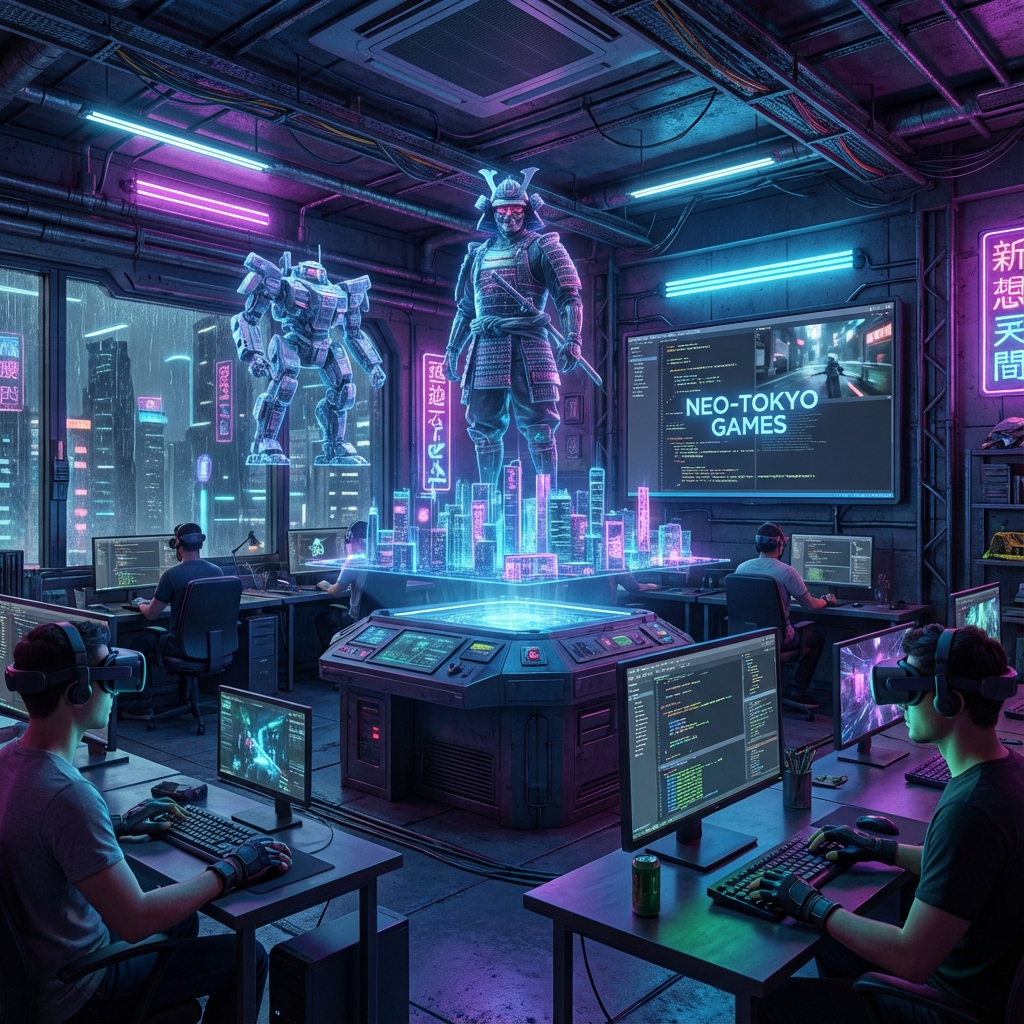
The gaming industry is notoriously demanding, with crunch times and massive asset requirements becoming the norm. However, a new ally has emerged: Generative AI. Tools like Magnuto are not just for making pretty pictures; they are becoming essential utilities in the game developer's toolkit.
Rapid Concepting and iteration
One of the most immediate benefits of AI in game dev is the ability to rapidly iterate on concept art. Instead of spending days sketching out different character designs or environment moods, artists can generate hundreds of variations in minutes using text prompts. "A cyberpunk street vendor with a robotic arm" or "a floating island with cascading waterfalls" can be visualized instantly, allowing the team to agree on a direction faster than ever before.
Generating Textures and Materials
Seamless textures are the skin of any 3D game. Creating them from scratch—ensuring they tile perfectly and have the right normal and specular maps—is time-consuming. AI models can now generate seamless textures for wood, stone, sci-fi metal panels, and alien organic matter. By prompting for "seamless mossy stone texture, top down view, high contrast," developers can get a base that requires only minor tweaking to be game-ready.
Skyboxes and Backgrounds
For 2D games or distant 3D backgrounds, AI is a game-changer. Generating a high-resolution, 360-degree panoramic view (or at least a wide-angle landscape that can be matte-painted) allows for immersive environments without the overhead of modeling every distant mountain. Prompts like "equirectangular projection of a starry nebula space background" can yield assets that drop right into a skybox shader.
UI Elements and Icons
Inventory icons, skill tree badges, and potion sprites are essential but often tedious to produce in bulk. AI can generate consistent sets of icons. By using a consistent style prompt (e.g., "fantasy RPG skill icon, gold border, vector style, flat shading"), you can populate an entire inventory system in an afternoon.
The Future: 3D from 2D
While Magnuto specializes in 2D image generation, the frontier is moving towards 2D-to-3D pipelines. The images you generate today can serve as the reference or even the direct input for photogrammetry-like AI tools that extrude depth and create 3D meshes. The workflow of the future starts with a text prompt and ends with a rigged model.
Whether you are a solo indie dev or part of a AAA studio, integrating AI image generation into your pipeline can save countless hours and unlock creative possibilities that were previously out of reach.