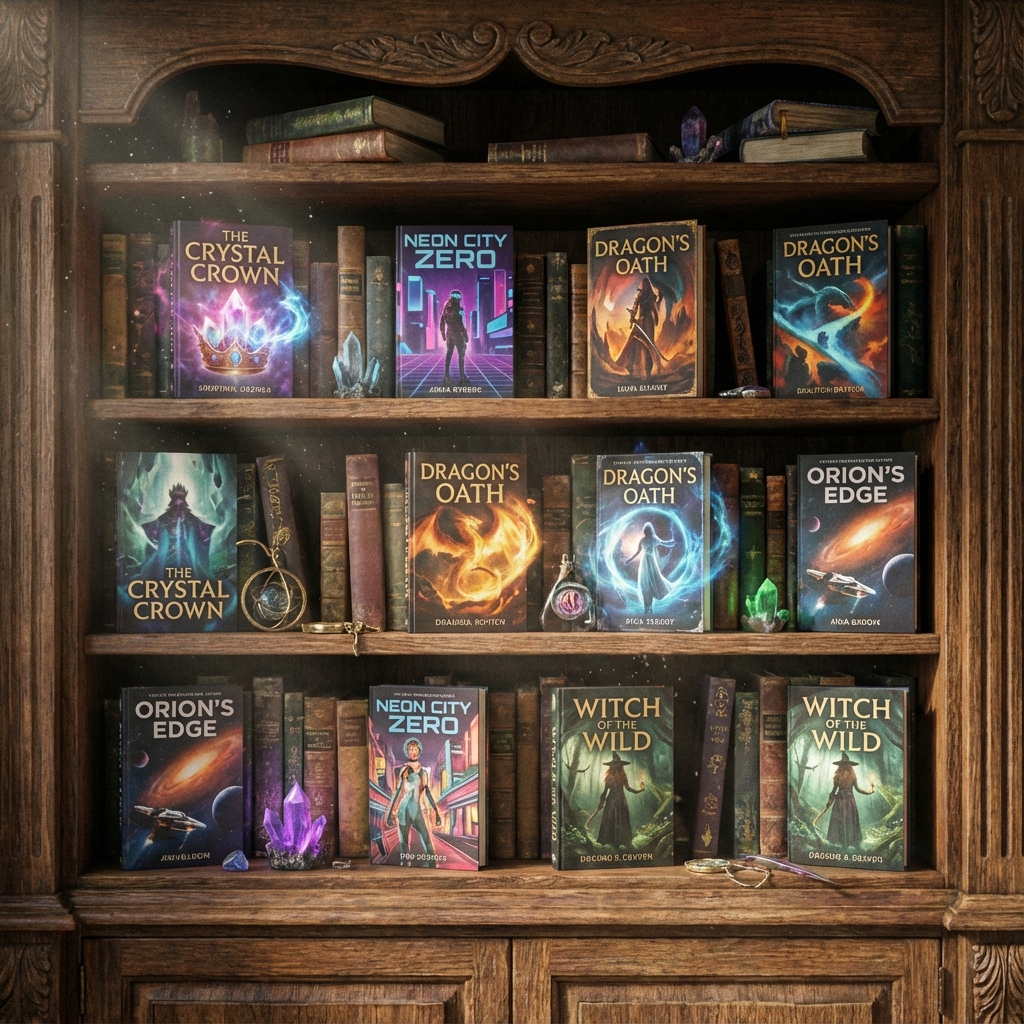
They say don't judge a book by its cover, but in the crowded marketplace of Amazon and Kindle Direct Publishing, everyone does. For self-published authors, a high-quality cover is the single most important marketing asset. AI is democratizing access to this level of design.
Genre Expectations
The first rule of cover design is to match the genre. A romance novel cover looks nothing like a
sci-fi thriller. Use your prompt to target these expectations.
Romance: "Pastel colors, soft lighting, illustrated style, couple
embracing."
Thriller: "High contrast, dark shadows, silhouette, cold blue tones,
mysterious figure."
Fantasy: "Epic scale, magical glow, ornate armor, dragon, digital painting
style."
Leaving Room for Typography
One common mistake beginners make is filling the entire frame with complex details. A book cover needs space for the Title and Author Name. When prompting, try to include keywords like "minimalist background," "negative space at the top," or "central composition." This ensures you have a clean canvas to add your text later in Canva or Photoshop.
Aspect Ratio is Key
Book covers are vertical. Always set your AI generator to a vertical aspect ratio (like 2:3 or 9:16). Generating a square image and cropping it often results in losing key parts of the composition.
Character Consistency
If you are writing a series, you need your protagonist to look the same on every cover. This is tricky with AI. Techniques like using a consistent "seed" number, or training a small LoRA model on your character's face (advanced), or simply using very specific descriptive prompts ("scar on left cheek, piercing green eyes, red leather jacket") can help maintain likeness across generations.
With AI, you can iterate through dozens of concepts in the time it takes to brew a cup of coffee. You are no longer limited by your budget, only by your ability to describe your story.